
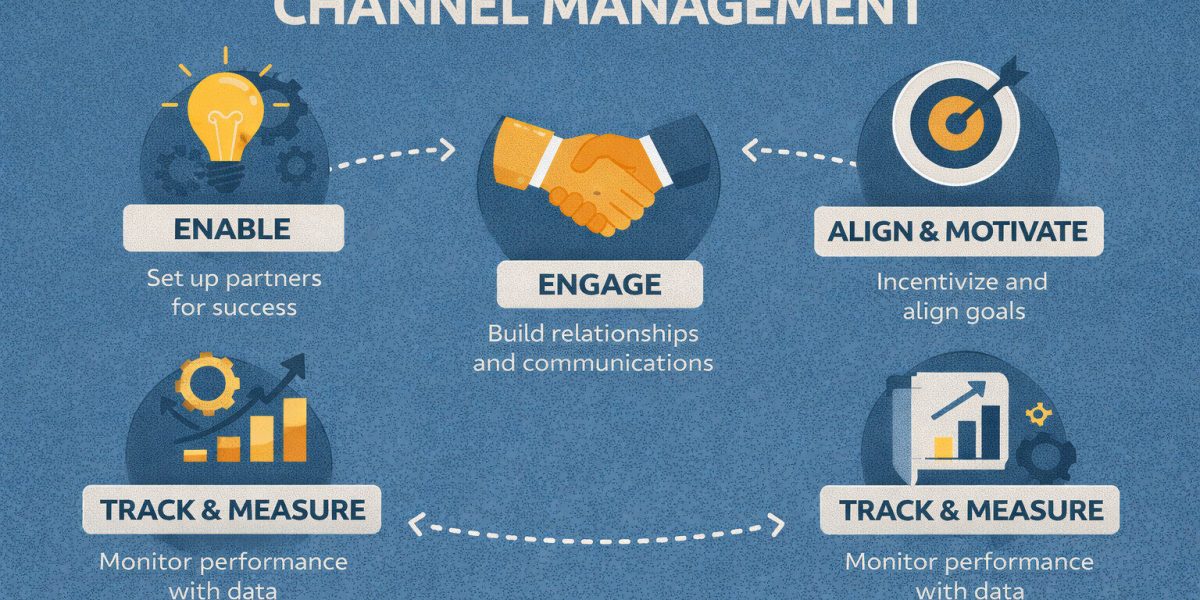
Managing a channel partner program isn’t just about onboarding resellers or distributors—it’s a structured, ongoing process that requires strategy, execution, and optimization. Done right, it becomes a scalable revenue engine. Done wrong, it results in misalignment, poor ROI, and lost opportunities.
Here’s a complete breakdown of the process of channel management, with actionable steps manufacturers can take to strengthen their indirect sales ecosystem.
Step 1: Partner Recruitment
The channel journey begins by identifying the right partners to represent your brand. This includes:
-
Defining your ideal partner profile (IPP)
-
Assessing market coverage gaps by region or industry
-
Evaluating potential partners’ customer base, tech stack, and sales capacity
-
Building attractive partner value propositions (margin, tools, support)
🎯 Tip: Tier your outreach by partner size, specialization, or vertical to tailor recruitment messaging and incentives.
Step 2: Partner Onboarding
Once recruited, partners need structured onboarding to succeed. This should include:
-
Access to a self-service partner portal
-
Product training (videos, webinars, datasheets)
-
Sales enablement tools (pitch decks, ROI calculators, objection handling)
-
MDF/Co-op program documentation
-
Account manager introductions and support plans
🧠 Goal: Get partners to their first revenue milestone as quickly and confidently as possible.
Step 3: Performance Management & Enablement
After onboarding, ongoing management becomes essential. Key activities include:
-
Assigning KPIs (sales volume, lead gen, training completion)
-
Monitoring progress via channel dashboards
-
Providing marketing support and campaign materials
-
Hosting regular QBRs (quarterly business reviews)
-
Offering incentives like rebates, SPIFs, or MDF usage
📊 Data is your friend—segment partners by performance to tailor your engagement strategy.
Step 4: Channel Marketing Alignment
Partners need brand-approved assets and support to go to market effectively. This step includes:
-
Delivering co-branded collateral (email, ads, landing pages)
-
Allocating and tracking MDF/co-op usage
-
Running joint campaigns with shared KPIs
-
Collecting leads and sharing results transparently
-
Auditing for brand consistency across channels
🛠️ Synchronized marketing leads to stronger brand impact, better partner satisfaction, and higher ROI.
Step 5: Claims, Incentives & Compliance
Channel programs often include financial incentives. Managing these effectively requires:
-
Automating claim submission, validation, and reimbursement
-
Tying claims to POS or inventory data
-
Flagging duplicate or ineligible requests
-
Managing rebate tiers and payouts
-
Ensuring compliance with program rules
⏱️ Automation saves hours of manual work—and ensures partners are paid promptly and accurately.
Step 6: Data Collection & Channel Insights
A mature channel management process involves constant learning. Leverage tools to:
-
Track POS data, sales velocity, and inventory flow
-
Identify gaps in coverage or product mix
-
Score partners by engagement, deal size, and growth potential
-
Forecast revenue by segment or territory
-
Make data-driven decisions on program evolution
🔍 Visibility is the foundation of growth. You can’t manage what you can’t measure.
Step 7: Continuous Optimization
The final step in the process of channel management is optimization. This is where you:
-
Refine program structure and benefits
-
Rebalance funds based on partner contribution
-
Sunset underperforming partners
-
Add new integrations or tools (CRM, LMS, PRM)
-
Capture and apply partner feedback
🚀 Channel management isn’t a static process—it’s an evolving strategy that adapts to changing market dynamics.
Why CMR Is Built for Every Step of the Process
At Computer Market Research, our platform supports the entire channel management lifecycle. Whether you’re building your program from scratch or scaling a global ecosystem, we help you:
-
Automate MDF/Co-op workflows
-
Track POS and inventory in real time
-
Launch partner portals with sales and marketing tools
-
Manage rebates, incentives, and deal registration
-
Gain insights into partner performance and program ROI
Final Thoughts
The process of channel management is complex—but with the right technology and strategy, it becomes repeatable, scalable, and profitable.
If you’re still using spreadsheets and email chains to manage your partners, you’re missing out on efficiency, insights, and revenue.
👉 Book a Demo to see how CMR helps you manage your entire partner ecosystem from one intelligent platform.