

Legacy channel management systems aren’t just slowing you down; they’re actively eroding your margins through administrative friction and avoidable partner conflict. You likely feel the strain when onboarding takes weeks instead of days or when a lack of visibility leads to duplicate deal registrations that frustrate your top performers. Finding the best all-in-one partner portal and upm product for onboarding and deal registration 2025 2026 is no longer a luxury for global enterprises. It’s a fundamental requirement for maintaining a competitive edge in an increasingly complex B2B ecosystem.
We understand that fragmented data and manual tracking create bottlenecks that stall growth and damage trust with your partners. This guide highlights the top-rated all-in-one UPM products designed to automate the partner lifecycle and eliminate registration disputes. You’ll discover how modern infrastructure like PartnerPortal™ provides the decision-grade data visibility needed to scale your channel program with confidence. We’ll examine the technical capabilities and integration strengths required to transform your operations and ensure your channel data remains a source of truth for 2026 and beyond.
Key Takeaways
- Unified Partner Management (UPM) transitions your channel strategy from fragmented manual tasks to a centralized, automated lifecycle.
- Selecting the best all-in-one partner portal and upm product for onboarding and deal registration 2025 2026 involves prioritizing customizable workflows that eliminate registration conflicts.
- Clean data serves as the foundation for modern portals, requiring the normalization of complex POS and inventory reports from global partners.
- Effective vendor evaluation focuses on deep CRM and ERP integration to ensure data transparency across your entire organization.
- Solutions like PartnerPortal™ offer a blend of technical automation and managed services to reduce the administrative load on your internal teams.
The Evolution of Partner Portals and UPM in 2025-2026
Unified Partner Management (UPM) represents the next stage of channel infrastructure, moving beyond siloed tools to a holistic ecosystem. For organizations seeking the best all-in-one partner portal and upm product for onboarding and deal registration 2025 2026, the focus has shifted toward precision and automation. Legacy systems, often characterized by fragmented data and manual entry, have become the primary obstacle to channel growth. In 2026, these outdated frameworks fail to provide the agility required to manage global indirect sales models. They create friction that discourages partner participation and obscures the actual health of your channel.
Modern portals have evolved from static repositories where documents simply sit to active enablement engines that drive revenue. This transition is fueled by the need for decision-grade insights that allow channel leaders to identify bottlenecks in real time. Instead of reacting to quarterly reports, managers can now see active deal registration trends as they happen. This proactive approach eliminates the “black hole” effect common in traditional partner programs. To better understand how these systems function in a practical setting, watch this helpful video regarding deal registration workflows:
From Basic PRM to Unified Partner Management (UPM)
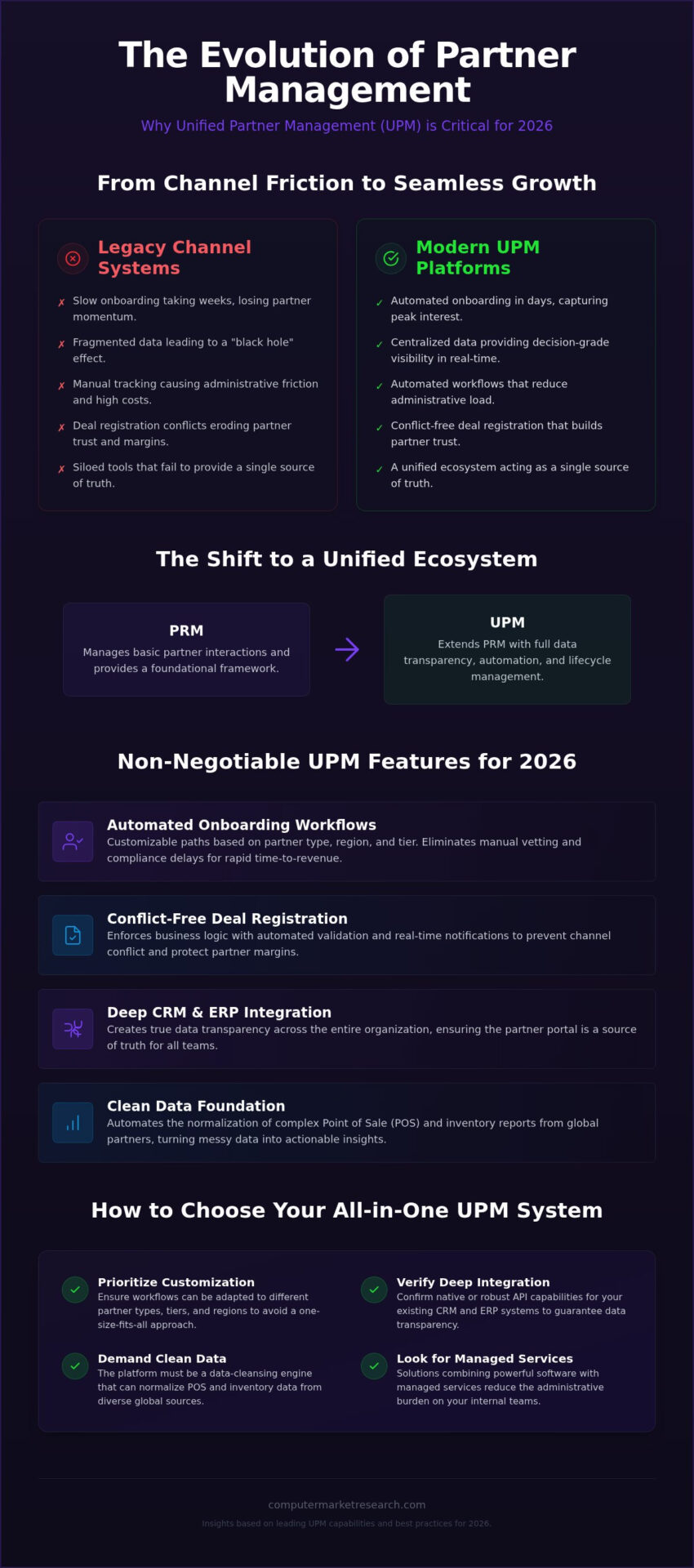
There’s a distinct difference between simple portal software and a comprehensive UPM platform. While What is Partner Relationship Management (PRM)? provides the foundational framework for managing channel interactions, UPM extends this by ensuring data transparency across the entire lifecycle. For Global 2000 companies, a unified source of truth isn’t optional; it’s the only way to build lasting partner trust. When data is fragmented, trust erodes; when it’s centralized, performance accelerates. The best UPM for 2026 isn’t just a portal; it’s a data-cleansing engine that turns partner activity into revenue.
Why 2026 Demands Automated Partner Onboarding
In competitive sectors like tech and manufacturing, slow onboarding is a direct revenue killer. Manual processes that take weeks prevent partners from selling during their peak period of interest. The shift toward self-service enablement allows partners to gain access to resources and training immediately. Implementing Partner Relationship Management as a strategic necessity ensures that your program remains scalable. Automated onboarding isn’t just about speed; it’s about creating a frictionless entry point that sets the tone for the entire relationship. By removing the administrative burden, you allow your partners to focus on what they do best: closing deals.
Best UPM Features for Onboarding and Deal Registration
Identifying the best all-in-one partner portal and upm product for onboarding and deal registration 2025 2026 requires looking beyond simple user interfaces. You need a system that enforces complex business logic without manual intervention. Non-negotiable features for an enterprise-grade platform include automated validation, multi-tier security, and real-time notification engines. These components work together to maintain partner momentum and ensure that your channel data remains accurate and actionable.
Streamlining the Onboarding Lifecycle
Onboarding shouldn’t be a generic, one-size-fits-all experience. Effective UPM platforms utilize customizable workflows that adapt based on partner type, region, or tier. This ensures that a global distributor follows a different compliance path than a local boutique reseller. Automated vetting and compliance checks eliminate the weeks-long delays typical of manual reviews. By the time a partner gains access, they should already have role-based permissions for the specific training and marketing assets they need.
Integrating Market Development Funds (MDF) into the early stages of engagement reinforces the value of the partnership. When a new partner sees a clear path to incentive eligibility during their first 90 days, they’re more likely to commit resources to your brand. This structured approach transforms onboarding from an administrative hurdle into a strategic enablement engine that drives immediate participation.
Advanced Deal Registration Workflows
Channel conflict is the fastest way to lose high-performing partners. Automated deal registration creates a “first-to-register” culture that rewards proactive selling. The system must use sophisticated validation rules to prevent duplicate entries before they reach your CRM. This immediate feedback tells the partner exactly where they stand, eliminating the frustration of working a lead only to find it was already claimed by a competitor.
Visibility is equally critical for maintaining trust. Partners need to see deal protection windows and receive automated expiration alerts. These notifications prompt them to update status or request extensions, keeping the pipeline fresh and accurate. Providing this level of transparency significantly reduces the administrative burden on your internal channel managers. If you’re ready to modernize your infrastructure, you might consider how to start optimizing your partner workflows today.
Real-time notifications serve as the connective tissue of these workflows. When a deal is approved or an onboarding step is completed, instant alerts keep all parties informed. This speed is what separates top-tier UPM products from basic portal software. It ensures that your partners spend less time asking for updates and more time closing revenue for your organization.
Solving the Data Burden: POS and Inventory Management
A sleek user interface might drive initial partner adoption, but “clean data” is the actual foundation of any sustainable channel program. Organizations seeking the best all-in-one partner portal and upm product for onboarding and deal registration 2025 2026 often overlook the backend complexity required to manage global data streams. Without accurate information flowing from your partners, your portal becomes little more than a digital filing cabinet for errors. Precision in data management is what separates high-performing programs from those plagued by administrative friction and financial leakage.
Normalizing POS data from diverse global partners is a significant technical challenge. Each partner often uses different file formats, naming conventions, and reporting cycles. If this information isn’t standardized, your visibility into actual market demand remains blurred. This lack of clarity directly impacts your ability to calculate true channel ROI, making it impossible to see which incentives are actually driving revenue and which are simply draining your budget.
The Critical Role of POS Data Management
Normalized data serves as the primary driver for accurate inventory forecasting and demand planning. When you understand exactly what is selling and where, you can optimize production schedules and reduce the cost of carrying excess stock. Inaccurate data specifically sabotages ship and debit management software by creating discrepancies between reported sales and claim requests. These errors lead to either overpayments that hurt your bottom line or rejected claims that frustrate your partners. POS data normalization is the process of converting fragmented reports into actionable sales insights.
Managed Data Services vs. In-House Administration
The hidden costs of manual data entry and cleansing are often substantial. In-house teams frequently struggle with the sheer volume of data, leading to a backlog that prevents real-time decision-making. Legacy manual tracking methods are primary obstacles to growth, as they introduce human error into sensitive financial calculations. For organizations looking to modernize their internal staff operations alongside their partner programs, you can visit Hajiri to see how specialized workforce management tools support businesses in Nepal. Outsourcing data management to specialized experts improves accuracy and ensures that your information is always audit-ready.
The value of real-time visibility into channel inventory cannot be overstated. It allows for a proactive approach to channel management, where you can address stock imbalances before they become critical issues. By integrating managed data services with your best all-in-one partner portal and upm product for onboarding and deal registration 2025 2026, you create a seamless flow of high-quality information. This modernization ensures that your channel data remains a strategic asset rather than an administrative burden.
How to Choose an All-in-One Partner Management System
Selecting the right infrastructure for your channel program requires a systematic approach that balances immediate operational needs with long-term strategic goals. When evaluating the best all-in-one partner portal and upm product for onboarding and deal registration 2025 2026, you should prioritize platforms that resolve the tension between ease of use and technical depth. A solution that looks good but lacks a robust data engine will eventually fail under the weight of enterprise-level complexity. We recommend a 5-step framework to ensure your selection remains viable for years to come.
- Audit Internal Data Flows: Map your existing partner journey to identify where manual handoffs cause delays or data loss.
- Verify Integration Compatibility: Ensure the platform supports deep, two-way synchronization with your existing CRM and ERP systems.
- Test Scalability Limits: Validate the system’s performance when managing thousands of global partners and high volumes of transaction data.
- Assess Modular Flexibility: Confirm the ability to add features like MDF management or Lead Management without requiring a complete system overhaul.
- Validate Support Models: Determine if the vendor provides the managed services necessary to offload your administrative burden.
Technical Integration and Scalability
A single source of truth is only possible if your partner portal talks directly to your internal systems. You need a two-way sync between the portal and Salesforce or Dynamics to ensure that when a partner registers a deal, the information is immediately reflected in your sales pipeline. This level of integration eliminates the need for manual data entry and reduces the risk of human error. Scalability is often overlooked during the demo phase; however, it’s critical. When you manage thousands of global partners, the platform’s ability to process high data volumes without latency becomes the difference between a functional tool and an operational bottleneck. Global compliance and multi-currency support are also essential for maintaining a standardized program across different regions.
Evaluating Vendor Support and Managed Services
Software alone is rarely enough for Global 2000 companies dealing with complex B2B data. Professional implementation and configuration are necessary to align the tool with your specific business rules. Many organizations prefer vendors that offer “Managed Data Services” to handle the ongoing cleansing and normalization of POS and inventory reports. This approach allows your channel managers to focus on partner relationships rather than troubleshooting data discrepancies. You should also assess the vendor’s long-term roadmap. Look for a commitment to automation features that will continue to reduce administrative friction as your program grows. To experience how a unified system can transform your channel operations, you can claim your 90-day free trial and see the impact on your data accuracy firsthand.
CMR PartnerPortal™: The Best UPM Product for 2026
CMR positions PartnerPortal™ as the definitive all-in-one solution for channel leaders who prioritize stability over hype. As global enterprises look for the best all-in-one partner portal and upm product for onboarding and deal registration 2025 2026, the need for a pragmatic, data-focused partner has never been clearer. CMR doesn’t just provide a digital interface; it offers a comprehensive ecosystem that blends sophisticated automation with specialized managed data services. This unique combination addresses the specific frustrations of business leaders who are tired of manual errors and fragmented information.
Centralizing Channel Operations with PartnerPortal™
Centralizing your channel operations requires more than just a login page. PartnerPortal™ provides a unified dashboard that tracks the entire partner lifecycle, from initial vetting to long-term performance monitoring. It functions as robust channel sales management software, allowing you to synchronize deal registration and inventory data directly with your internal systems. Every aspect of the platform is designed for custom branding and configuration, ensuring the portal matches your corporate identity and provides a professional experience for your partners. By automating these core functions, you eliminate the operational bottlenecks that typically slow down revenue generation and partner engagement.
The CMR Advantage: Accuracy and Reliability
The CMR advantage is rooted in decades of practical experience. Founded in 1984, the company brings a level of channel expertise that newer market entrants cannot replicate. While some vendors focus on “flashy” marketing and trendy features, CMR prioritizes technical competence and the delivery of high-quality information. This focus on stability and accuracy is why Global 2000 companies trust CMR to manage their most complex data challenges, including POS and inventory reports. The managed data services provided by CMR offload the heavy lifting of data normalization, ensuring that your incentive programs are based on accurate, verified sales figures. This reliability builds trust with your partners and ensures that your financial tracking remains beyond reproach.
Choosing the best all-in-one partner portal and upm product for onboarding and deal registration 2025 2026 means selecting a platform that offers a direct path to improved channel ROI. When your data is clean and your processes are automated, your team is free to focus on strategic growth rather than administrative troubleshooting. CMR serves as a seasoned consultant that has encountered every data challenge imaginable and built a systematic way to solve them. This methodical approach ensures that your transition from manual workflows to modernized systems is the only logical step for your organization.
Modernizing Your Channel Infrastructure for 2026
Transitioning from legacy manual tracking to a unified infrastructure is the most effective way to eliminate operational bottlenecks and drive channel performance. By prioritizing automated workflows and decision-grade data visibility, you ensure that your partners remain focused on sales rather than administrative friction. Selecting the best all-in-one partner portal and upm product for onboarding and deal registration 2025 2026 requires a commitment to data accuracy and technical reliability.
CMR brings over 40 years of channel data expertise to help you navigate these complexities. Our comprehensive Managed Data Services provide the stability that Global 2000 enterprises need to scale with confidence. It’s time to replace fragmented systems with a single source of truth that rewards your top-performing partners. Automate your channel operations with PartnerPortal™ today and experience the clarity of a modernized ecosystem. We look forward to helping you build a more efficient and profitable channel program.
Frequently Asked Questions
What is the difference between PRM and UPM?
Unified Partner Management (UPM) is a holistic evolution of Partner Relationship Management (PRM) that integrates data management and lifecycle tracking into a single ecosystem. While PRM focuses on relationship management, UPM ensures data transparency across all partner touchpoints. This transition helps Global 2000 companies eliminate the fragmented information that often plagues traditional programs. It’s about moving from a communication tool to a results-driven data engine that supports complex global operations.
How does deal registration software prevent channel conflict?
Deal registration software prevents conflict by establishing a clear “first-to-register” rule enforced through automated validation. When a partner submits a lead, the system checks for existing entries and grants exclusive protection windows to the first qualified claimant. This transparency ensures that sales teams aren’t competing for the same business. Automated alerts also notify partners when protection is expiring, prompting them to update the status or release the lead for others.
What are the key benefits of automated partner onboarding?
Automated onboarding reduces the time-to-revenue by allowing new partners to self-serve through vetting, compliance, and training modules. Instead of waiting weeks for manual approval, partners can gain access to marketing assets and deal registration tools in days. This efficiency is critical for organizations using the best all-in-one partner portal and upm product for onboarding and deal registration 2025 2026. It ensures that your program remains scalable without increasing administrative overhead.
Can PartnerPortal™ integrate with my existing Salesforce CRM?
Yes, PartnerPortal™ is designed for deep, two-way synchronization with Salesforce and other major CRM platforms. This integration ensures that deal registrations and partner updates are reflected in your sales pipeline in real time. By maintaining a single source of truth, you eliminate the need for manual data entry and reduce the risk of human error. This seamless flow of information is a core strength for enterprises requiring stability and accuracy across global markets.
How does POS data management improve channel visibility?
POS data management improves visibility by normalizing fragmented sales reports into actionable insights. It allows you to see exactly which products are moving through the channel and in which regions. This level of detail is essential for accurate inventory forecasting and demand planning. When you have high-quality information, you can identify market trends early and adjust your production schedules or incentive programs to maximize revenue growth and channel ROI.
Why should I choose an all-in-one UPM over modular tools?
Choosing an all-in-one UPM eliminates the data silos and integration headaches associated with managing multiple fragmented tools. A unified system provides a consistent user experience for partners and a centralized management console for your internal teams. This holistic approach ensures that onboarding, deal registration, and incentive tracking all work from the same dataset. It’s the most logical step for growing organizations that value order, performance, and long-term infrastructure stability.
What role does MDF management play in a partner portal?
MDF management within a portal automates the request, approval, and reimbursement process for marketing funds. It ensures that partners are using co-op dollars for approved activities that align with your corporate strategy. By integrating MDF with your best all-in-one partner portal and upm product for onboarding and deal registration 2025 2026, you can track the direct impact of marketing spend on deal registration and revenue. This transparency helps you optimize your channel investments.
How long does a typical UPM implementation take in 2026?
Implementation timelines vary based on complexity, but most enterprise-grade UPM systems take between 60 and 90 days to fully configure. This period includes system integration, data migration, and customized workflow setup. While the software can be deployed quickly, the alignment with your specific business rules and CRM environment requires a methodical approach. CMR’s decades of expertise ensure that this process is handled with precision to avoid operational disruptions during the transition.

Article by
Del Heles
Del Heles is the founder and CEO of Computer Market Research (CMR), a channel management software company he launched in 1984. With more than 40 years of experience, he’s known for helping manufacturers and distributors simplify complex partner programs through practical, customer-focused technology solutions.