

We agree that your time is better spent on high-level strategy than on correcting data discrepancies. This guide promises to show you how to transform fragmented channel data into measurable revenue growth using sophisticated performance management tools. You’ll learn how to centralize partner data and automate incentive workflows to eliminate manual bottlenecks. We will preview the path toward decision-grade insights, ensuring your transition to a modernized infrastructure provides the stability and control your organization requires for the 2026 fiscal year. By focusing on data integrity, you can move away from reactive troubleshooting and toward a proactive, results-driven channel strategy.
Key Takeaways
- Understand why the industry is shifting from simple relationship management to a data-first approach with partner performance management software.
- Learn how to eliminate manual errors and administrative friction by automating deal registration and incentive workflows.
- Discover the importance of real-time POS and inventory visibility in maintaining channel transparency and protecting profit margins.
- Identify the critical scalability and integration criteria required to support a global channel ecosystem effectively in 2026.
- Explore how a centralized hub like PartnerPortal™ can streamline partner onboarding and normalize complex, fragmented data sets.
What is Partner Performance Management Software?
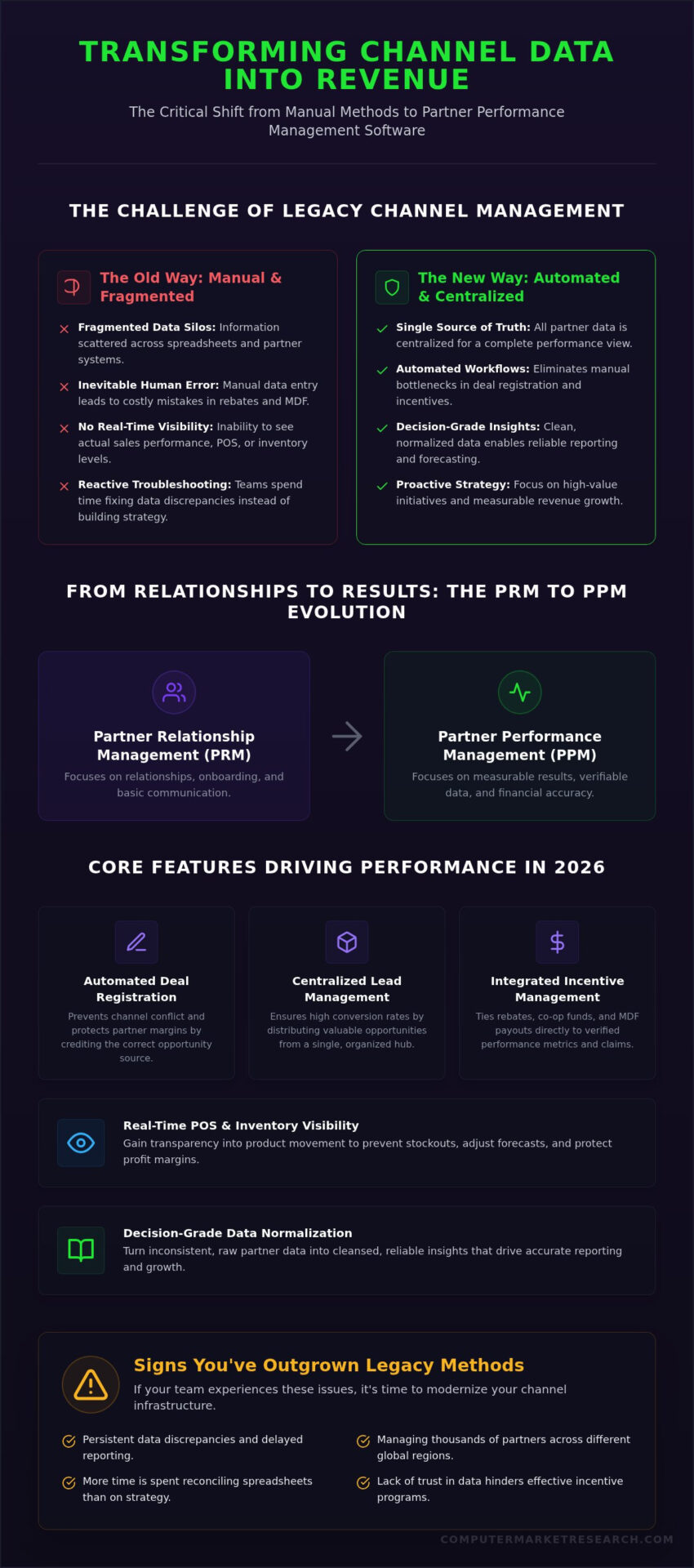
Partner performance management software is a specialized platform designed to track, analyze, and optimize indirect sales channel activities. In a market where complexity is the norm, this software provides a single source of truth for both manufacturers and their partners. Legacy methods, such as manual tracking and disconnected spreadsheets, have become the primary obstacles to scaling global channels. These outdated processes lead to data fragmentation and human error, which ultimately stifle revenue growth. When data is siloed across various partner systems, leadership loses the ability to make informed decisions. Reliability in your data isn’t just a preference; it’s a requirement for financial accuracy. By centralizing these operations, companies can move beyond the limitations of manual entry and embrace a more disciplined approach to channel management.
The Difference Between PRM and Performance Management
While many organizations start with Partner Relationship Management (PRM) to handle basic onboarding and communication, the requirements for 2026 have evolved. PRM focuses on the relationship; however, PPM focuses on results and verifiable data. Modern partner performance management software integrates directly with your existing CRM to provide a holistic view of the sales cycle. This integration ensures that every transaction is accounted for and every incentive is accurately calculated. Automated workflows reduce administrative overhead by handling repetitive tasks that previously required manual intervention. This transition allows your team to focus on high-value initiatives rather than data cleanup.
Who Needs Enterprise-Grade Performance Software?
Signs that your organization has outgrown legacy channel management methods often appear as persistent data discrepancies and delayed reporting. For Global 2000 companies managing thousands of partners across different regions, the volume of data makes manual oversight impossible. If your team spends more time reconciling spreadsheets than developing strategy, it’s time for a change. High-quality information is the foundation of any successful incentive program. You can learn how to partner smarter by adopting systems that offer real-time visibility into POS and inventory data. This shift ensures that your channel operations remain stable, accurate, and ready for expansion. Order and performance must be prioritized to maintain a competitive edge in a saturated market.
Key Features of a Modern Partner Performance System
A modern partner performance management software platform must go beyond simple communication to provide deep operational control. High-quality data is the engine of any successful channel program. Real-time visibility into Point of Sale (POS) and inventory data allows manufacturers to see exactly where products are moving and where they are sitting idle. This transparency prevents stockouts and overstocking, ensuring that capital isn’t tied up in the wrong places. When you have access to daily POS feeds, you can adjust production forecasts and marketing support with surgical precision.
Beyond inventory management, the system must protect your bottom line through specific, automated features:
- Automated Deal Registration: This feature prevents channel conflict by ensuring only one partner is credited for a specific opportunity, which protects margins for everyone involved.
- Centralized Lead Management: Distributing leads from a central hub ensures high conversion rates and prevents valuable opportunities from falling through the cracks.
- Integrated Incentive Management: Managing rebates, co-op funds, and MDF within one system ensures that payouts are always tied to verified performance metrics.
Decision-Grade Data and Normalization
Raw partner data is often inconsistent and riddled with errors. Without a systematic way to cleanse and normalize this information, your reports will remain unreliable and difficult to act upon. Managed data services offload the administrative burden from your internal teams, allowing them to focus on strategy instead of spreadsheet cleanup. This process turns chaotic inputs into decision-grade insights that drive growth. For a deeper look at this process, you should consult the definitive guide to channel data management.
Automated Incentive and Rebate Workflows
Manual claim processing is slow, expensive, and prone to error. It creates friction with partners who expect timely payouts for their efforts. Automated workflows eliminate these delays by validating claims against actual POS data in real time. This not only speeds up partner payouts but also significantly reduces the risk of overpayments and fraudulent claims. By removing human intervention from the validation stage, you ensure that every dollar spent on incentives is backed by a verified sale. You can also optimize your ship and debit management to ensure financial accuracy across all distributor transactions. If you’re ready to see how these features can stabilize your operations, you might want to explore a risk-free implementation to test the system in your own environment.
Maximizing Channel ROI Through Performance Data
Channel ROI shouldn’t be a mystery or a best-guess estimate. By leveraging partner performance management software, leadership can move from speculative spending to data-driven precision. High-performing ecosystems rely on the ability to identify and reward the most productive partners based on objective metrics rather than legacy relationships. When you segment your partners using actual POS data and margin contribution, you can ensure your highest incentives are reserved for those driving the most significant business value. This disciplined approach eliminates the “spray and pray” method of channel support, focusing resources where they generate the highest return.
Real-time data facilitates agile adjustments to marketing and incentive spend. If a specific rebate program isn’t moving the needle in a target region, you can reallocate those funds within the same quarter to a more successful initiative. This responsiveness is critical in a fluctuating market. Additionally, robust deal registration processes do more than just prevent conflict; they reduce sales cycle time and increase win rates by providing manufacturers with early visibility into the pipeline. This early engagement allows for better technical and sales support, bridging the gap between channel incentives and measurable revenue growth.
Optimizing MDF and Co-op Fund Allocation
Market development funds often suffer from low utilization or poor tracking, making it difficult to prove their effectiveness. You can explore our Co-op/MDF platform to track fund utilization and campaign performance in a centralized dashboard. This level of transparency ensures that every dollar is spent in compliance with program guidelines. By automating the claim and documentation process, you remove the administrative friction that often prevents partners from participating in marketing activities. Clear visibility into which campaigns drive the most leads allows you to refine your strategy and maximize the impact of every co-op dollar.
Inventory Management as a Performance Indicator
Performance isn’t solely defined by sales volume; it’s also defined by product availability and channel health. Real-time channel visibility prevents the costly cycle of stockouts and overstock that erodes partner profitability. This data directly informs production planning and supply chain decisions, ensuring that inventory is staged where demand is highest. When you understand inventory levels across the entire channel, you can proactively address slow-moving SKUs before they become a liability. In 2026, real-time inventory visibility is the definitive key performance metric that separates high-performing ecosystems from those struggling with operational friction.
How to Choose the Right Performance Management Software
Choosing the right partner performance management software is a strategic decision that directly impacts your organization’s financial accuracy and operational efficiency. It’s not merely about selecting a tool with a modern interface; it’s about the underlying architecture and the vendor’s ability to support complex data workflows. You must evaluate scalability by verifying if the system can handle global data volumes and multi-currency incentives without performance degradation. As your partner network expands, the software must remain stable and responsive to keep pace with your growth. Integration is equally vital. Ensure the platform works seamlessly with your existing CRM and ERP systems to prevent the creation of new data silos.
One critical differentiator is whether a vendor provides managed data services or simply hands you a tool. Many platforms leave the burden of data cleansing and normalization on your internal teams, which often leads back to the manual errors you’re trying to avoid. Seek a partner that assists with data accuracy at the source. Additionally, look for modularity in the system design. A modular approach allows you to start with a specific module, such as Co-op/MDF Management, and scale your capabilities as your program matures and your requirements become more sophisticated.
Technical Integration and Implementation
A cloud-based SaaS architecture is essential for global accessibility, ensuring all partners have a consistent experience regardless of their location. During the implementation phase, you should set clear KPIs to measure success, such as the speed of data normalization or the rate of partner adoption. These metrics provide a roadmap for a successful rollout. Don’t overlook security and compliance during your evaluation. You must ask vendors for documentation regarding SOC 2 and GDPR compliance to ensure your sensitive channel information remains protected against unauthorized access or breaches.
Evaluating Vendor Expertise and Support
Industry experience in B2B data administration is a strong indicator of a vendor’s ability to handle complex relationship structures. Generalist providers often lack the technical depth needed for specialized incentive programs or ship and debit workflows. Professional services for custom configuration and branding ensure the portal aligns with your corporate identity and specific operational requirements. While you might already understand the basics from a complete guide to partner relationship management, the performance management layer requires a more technically focused partner. If you’re ready to transition from manual tracking to an automated, scalable system, you can claim your 90-day free trial to experience the difference high-quality information makes in your channel strategy.
Scaling Global Channels with CMR PartnerPortal™
Scaling global channels requires more than just a functional tool; it demands a robust infrastructure capable of unifying disparate data streams into a single, actionable dashboard. PartnerPortal™ serves as this centralized hub, allowing manufacturers to manage onboarding, performance tracking, and complex incentive programs within one secure environment. By consolidating these functions, organizations eliminate the friction inherent in fragmented legacy systems. This centralized approach ensures that every partner, regardless of their geographic location, operates under the same standards of accuracy and transparency. It’s the only logical step for organizations looking to move beyond the limitations of manual oversight.
The administrative burden of managing global channels often stems from the sheer volume of raw, unformatted data. CMR’s managed data services directly address this obstacle by cleansing and normalizing POS and inventory reports before they reach your internal systems. This proactive approach ensures that your leadership team works only with high-quality, decision-grade information. When you remove the need for manual reconciliation, you free your channel managers to focus on strategic growth rather than data entry. For manufacturers with service-oriented partners, using a platform like Repair-CRM to digitize field operations ensures that the data flowing into the central system is accurate and timely. Leveraging this level of partner performance management software allows Global 2000 enterprises to maintain control over their ecosystems while driving measurable revenue growth through real-time visibility.
Why CMR is the Trusted Partner for Global Enterprises
With over 40 years of experience in automating channel management solutions, CMR understands the unique challenges faced by large-scale manufacturers. Founded in 1984, the company has built a reputation for stability and technical competence. We have a proven track record of helping Fortune 500 and Global 2000 companies optimize their channel ROI through precise data administration. Our platform isn’t a one-size-fits-all solution; it consists of customizable modules designed to fit the specific operational nuances of your business. You can discover the CMR PartnerPortal™ advantage and see how our specialized expertise supports long-term scalability.
Get Started with a Risk-Free Trial
Transitioning from manual workflows to a modernized system is a significant step toward operational excellence. We provide a clear path out of the bottlenecks caused by legacy tracking methods. You can experience the power of automated partner performance management software first-hand without an immediate long-term commitment. This allows your team to validate the system’s impact on your specific data workflows and partner relationships. It’s time to replace obsolete processes with a systematic, results-driven approach that prioritizes accuracy. You can claim your 90-day free trial today to begin your organization’s channel transformation.
Modernize Your Channel Infrastructure for 2026
The transition from manual tracking to automated systems is no longer a choice for organizations aiming to maintain a competitive edge. By centralizing operations and prioritizing data integrity, you ensure that every incentive dollar is backed by verified performance. We’ve explored how high-quality information transforms fragmented silos into a cohesive, revenue-generating engine. Implementing sophisticated partner performance management software is the most effective way to eliminate administrative friction and secure long-term scalability.
Computer Market Research has spent decades helping Global 2000 and Fortune 500 companies refine their channel strategies. Our managed data services provide the precision required for automated MDF and rebate processing, ensuring your financial tracking remains beyond reproach. You don’t have to navigate this transition alone. Our seasoned consultants are ready to help you replace obsolete methods with modern infrastructure that prioritizes order and performance above all else.
If you’re ready to see these results in your own ecosystem, you can claim your 90-day free trial and begin your transformation today. We look forward to helping you build a more transparent and profitable channel future.
Frequently Asked Questions
What is the difference between PRM and partner performance management software?
Partner performance management software focuses on measurable outcomes and data normalization, whereas PRM primarily handles relationship logistics and onboarding. While PRM creates the portal for interaction, performance systems provide the technical infrastructure to track POS data and inventory accurately. This distinction is vital for organizations that need to move beyond simple communication and into deep financial accountability for every channel dollar spent.
How does partner performance software integrate with my current CRM?
Integration is achieved through secure API connections that allow for a seamless flow of information between the portal and your CRM or ERP. This setup ensures that lead distributions and deal registrations are reflected in your internal systems in real time. By synchronizing these platforms, you eliminate the need for manual data reentry and reduce the risk of discrepancies between your channel and direct sales teams.
Can this software help reduce channel conflict?
Automated deal registration is the primary mechanism used to mitigate channel conflict and protect partner margins. The software provides a timestamped record of every opportunity, ensuring that the first partner to register a lead receives the appropriate credit and support. This transparency builds trust within your ecosystem and prevents the internal friction that often occurs when multiple partners pursue the same prospect.
How much does partner performance management software typically cost?
What are the benefits of automating MDF and rebate programs?
Automating these programs significantly reduces administrative overhead and eliminates the risk of human error in claim validation. By tying incentives directly to verified POS data, you ensure that rebates are only paid on actual sales rather than projected figures. This precision protects your bottom line and provides partners with a predictable, transparent payout schedule that encourages continued loyalty and performance.
Is my channel data secure in a cloud-based partner portal?
Cloud-based portals prioritize security by utilizing advanced encryption protocols and maintaining compliance with international standards like SOC 2. These platforms are designed to handle sensitive B2B information, offering role-based access controls that limit data visibility to specific users. Regular security audits and continuous monitoring ensure that your proprietary channel information remains protected against unauthorized access and potential cyber threats.
What happens if my partners use different reporting formats for POS data?
The system employs managed data services to normalize disparate reporting formats into a unified, decision-grade data set. Whether your partners submit information via EDI, flat files, or manual uploads, the software cleanses and maps the data to your internal standards. This process ensures that your reporting remains accurate and consistent, regardless of the technical capabilities or preferred formats of your individual partners.
How long does it take to implement a new partner management system?
A typical implementation can take anywhere from 60 to 90 days depending on the depth of your integration requirements. Starting with a single module, such as lead management, can often accelerate the initial launch and provide immediate value to your channel team. A phased approach allows your organization to adapt to the new system while gradually scaling up to more complex automated workflows.

Article by
Del Heles
Del Heles is the founder and CEO of Computer Market Research (CMR), a channel management software company he launched in 1984. With more than 40 years of experience, he’s known for helping manufacturers and distributors simplify complex partner programs through practical, customer-focused technology solutions.