

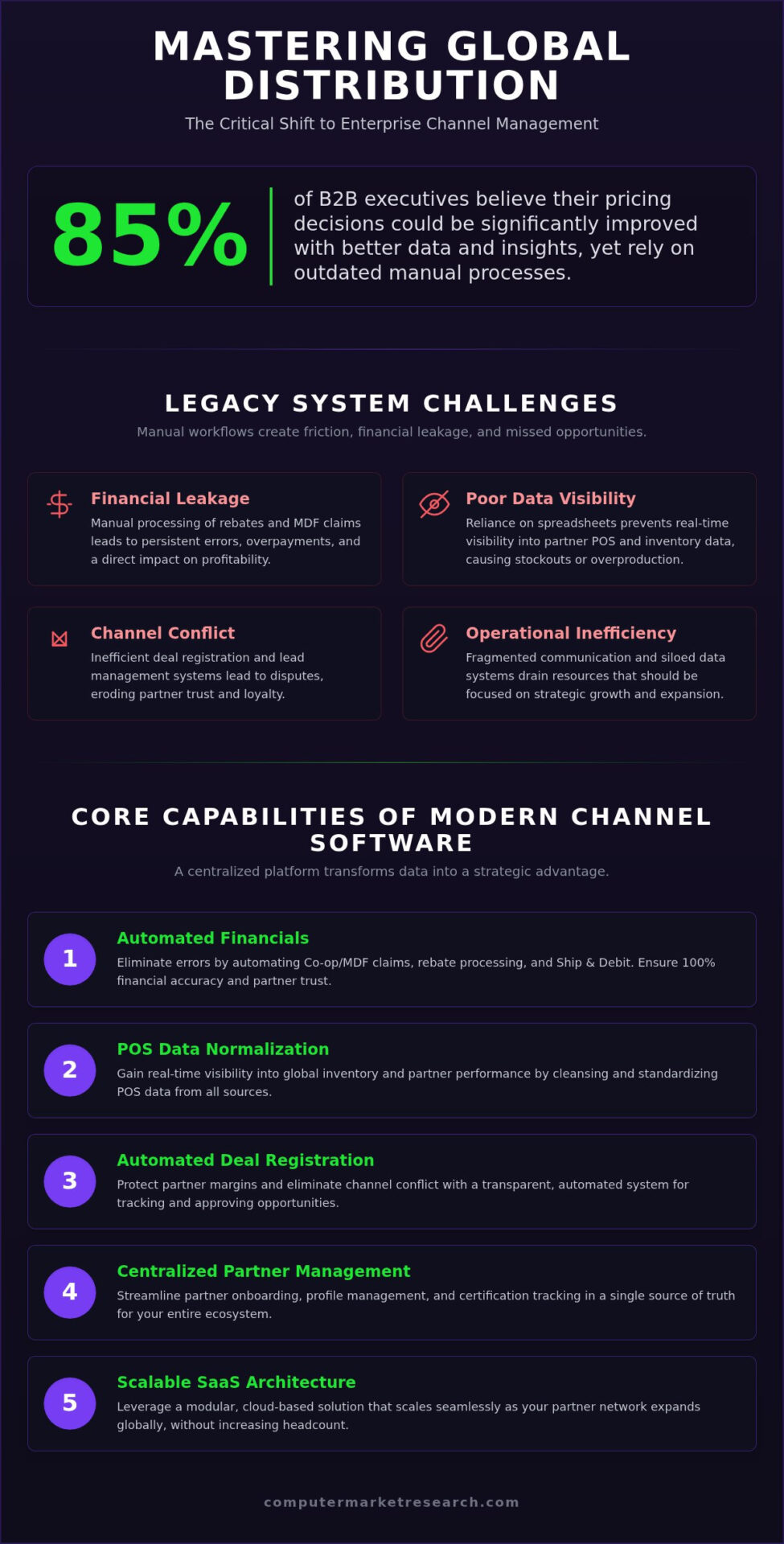
Exactly 85% of B2B executives believe their pricing decisions could be significantly improved with better data and insights. For organizations managing global distribution, this lack of clarity often stems from the manual processing of rebates and MDF claims, which leads to persistent errors and financial leakage. Relying on legacy spreadsheets makes it nearly impossible to gain real-time visibility into partner POS and inventory data. Implementing a robust enterprise channel management software solution is no longer a luxury for growth; it’s a technical necessity to maintain control over complex partner ecosystems.
You’ve likely felt the friction of channel conflict caused by poor deal registration tracking or low portal adoption rates. It’s a common frustration, but it doesn’t have to be your operational standard. This guide provides a clear path to mastering global distribution by automating financial incentives and normalizing data for maximum channel ROI. We’ll examine how to transition from fragmented manual workflows to a centralized system that delivers clean, decision-grade information and strengthens partner relationships for 2026 and beyond.
Key Takeaways
- Learn how to eliminate administrative overhead by automating co-op/MDF claims and rebate processing to ensure financial accuracy.
- Discover the critical role of POS data normalization in gaining real-time visibility into global inventory levels and partner performance.
- Understand why modern enterprise channel management software is essential for protecting partner margins through automated deal registration.
- Identify a clear path to implementing a data-first strategy by auditing manual processes and identifying specific points of financial leakage.
- Explore the advantages of a modular SaaS architecture that allows your channel operations to scale seamlessly as your partner ecosystem expands.
The Complexity of Global Channel Operations in 2026
Global channel management has evolved into a high-stakes discipline where data integrity dictates profitability. For Global 2000 companies, the legacy approach of maintaining siloed systems is no longer viable because it fails to account for the sheer volume of global transactions. As the enterprise software market is projected to grow by $207.9 billion by 2030, the pressure to integrate disparate data streams has reached a critical point. Modern enterprise channel management software serves as the connective tissue between a brand and its multi-tier distribution network, ensuring every transaction is visible and every incentive is accurately earned.
The financial burden of manual partner tracking is staggering. When teams rely on static spreadsheets, they invite human error into every rebate calculation and inventory report. This operational friction prevents leaders from making the agile decisions required by 2026 market dynamics. Real-time visibility isn’t just a goal; it’s a requirement for survival in a multi-tier distribution landscape.
To better understand this concept, watch this helpful video:
Identifying the Obstacles to Channel Growth
Channel growth often stalls due to invisible data leaks that occur when systems don’t communicate. Inaccurate POS and inventory reporting create “ghost” stock levels, leading to missed sales opportunities, stockouts, or expensive overproduction. Beyond inventory issues, fragmented communication between vendors and partners is a primary driver of channel conflict. When deal registration is handled through email chains rather than a centralized system, partners lose trust and feel their margins aren’t protected. Delayed incentive payments further erode this loyalty, as partners prioritize vendors who provide predictable, automated financial rewards. These inefficiencies act as a persistent tax on your distribution network, draining resources that should be used for expansion.
The Shift Toward Automated Data Administration
Transitioning to a proactive sales model requires a departure from reactive, manual workflows. Cloud-based SaaS solutions allow organizations to unify global networks under a single source of truth, eliminating local data silos. Data transparency is the new currency in these relationships. McKinsey research indicates that 85% of B2B executives believe their pricing decisions could be improved with better data and insights. By providing partners with real-time access to their performance metrics and incentive status, brands foster a culture of accountability. Implementing enterprise channel management software transforms data administration from a back-office burden into a strategic advantage. It’s the only logical step for organizations looking to scale global operations without exponentially increasing their administrative headcount.
Core Capabilities of Enterprise Channel Software
High-performance enterprise channel management software acts as the foundation for scalable distribution. It replaces fragmented workflows with centralized partner onboarding, ensuring that every new addition to your network is vetted and integrated systematically. Automated profile management keeps partner data current without manual intervention from your team, allowing your channel managers to focus on relationship building rather than data entry. This systematic approach ensures that partner certifications and compliance requirements are tracked in real time.
Real-time deal registration is a critical capability for protecting partner margins. By providing a transparent environment for opportunity tracking, you eliminate the overlapping claims that lead to channel conflict. This transparency extends to lead management systems, which use performance data to route high-quality opportunities to your most productive partners. When partners see that their efforts are protected and rewarded, their engagement with your brand increases. This creates a virtuous cycle where high performers are incentivized to invest more deeply in your product lines.
Gaining inventory visibility across the entire distribution value chain remains a top priority for 2026. Without this oversight, overstocking and stockouts become inevitable, leading to capital inefficiency. Modern systems provide the granular detail needed to balance supply with actual market demand. This visibility allows for more accurate production forecasting and ensures that partners always have the necessary stock to close deals, a principle that is fundamental for large-scale marketplaces like Odlots Shopping.
PartnerPortal™: The Hub of Your Ecosystem
A branded, centralized entry point is essential for maintaining professional standards across diverse partner types. PartnerPortal™ centralizes indirect sales operations by providing a single interface for all channel activities. Its modular architecture allows you to deploy only the tools you need, such as co-op/MDF management or lead tracking, without cluttering the user experience. This flexibility ensures that the portal remains accessible, encouraging higher adoption rates among your partners. By tailoring the interface to specific partner roles, you provide a frictionless experience that drives productivity and long-term loyalty.
Managed Data Services and Normalization
The gap between raw partner reports and decision-grade insights is often filled with manual labor. Raw POS data is frequently inconsistent, containing variations in SKU names or formatting that render it useless for high-level analysis. Managed services offload the administrative burden of POS cleansing, transforming fragmented records into actionable intelligence. This level of precision is vital for complex channel data management needs. Digital pricing transformations, supported by clean data, can lead to a 2 to 7 percentage point improvement in profit margins. When your data is normalized, you can confidently calculate rebates and forecast trends. To see how these automated workflows can stabilize your operations, you might consider how to start with a specialized evaluation of your current data structure.
Financial Accuracy: MDF, Rebates, and Ship & Debit
Manual data entry is the primary catalyst for financial leakage within global distribution networks. When incentive programs are managed through disconnected spreadsheets, overpayments and fraudulent claims become inevitable. Enterprise channel management software provides the necessary guardrails to prevent these fiscal errors by introducing automated validation at every stage of the transaction. By centralizing the financial workflow, organizations can ensure that every dollar spent on partner incentives is verified against actual sales data, eliminating the guesswork that characterizes legacy systems.
Automating the co-op/MDF claim process is the most effective way to reduce administrative overhead while increasing partner satisfaction. When claims are processed through a systematic workflow, the time to reimbursement drops, which directly impacts partner cash flow and loyalty. This technical competence builds a foundation of trust. It ensures that your channel remains a stable, predictable engine for revenue rather than a source of constant financial reconciliation.
Optimizing Market Development Funds (MDF)
Tracking fund utilization is only the first step; the ultimate goal is measuring the actual ROI on marketing spend. Many organizations struggle to identify which activities drive growth because their data is fragmented across various regions. Simplifying the approval workflow for co-op/MDF programs allows your marketing team to focus on strategy rather than auditing receipts. For those looking to refine their approach, referencing the MDF strategic guide provides a blueprint for aligning fund allocation with long-term growth tactics. This transition from “use it or lose it” spending to performance-based funding is a hallmark of a mature channel strategy.
Standardizing Incentive Workflows
Incentives are only effective if they drive specific, measurable partner behaviors that align with corporate revenue goals. Design your programs to reward the activities that matter most, whether that’s new customer acquisition or technical certification. Timely payments are critical here. If a partner waits months for a rebate, you lose “mindshare” and they’ll likely prioritize a competitor who pays faster. Utilizing specialized ship and debit management software ensures that distributors are protected from price fluctuations without the need for manual credit memos. Using normalized data to identify which structures actually drive sales allows you to iterate on your programs with confidence, ensuring your enterprise channel management software delivers a clear, measurable return on investment.
Implementing a Data-First Channel Strategy
Successful implementation of enterprise channel management software follows a methodical progression from auditing to technical integration. The first step involves a comprehensive audit of existing manual processes to identify specific data leakage points, such as unverified rebate claims or missed POS reports. Once these vulnerabilities are mapped, leadership must define clear KPIs for partner performance and incentive ROI. This ensures that every automated workflow serves a measurable business objective rather than just digitizing an inefficient process.
The third phase focuses on technical connectivity. Linking your channel software with existing CRM and ERP systems eliminates the data silos that typically lead to operational bottlenecks. Finally, the rollout of the partner portal must include clear training and a strong value proposition for the partners themselves. If the system doesn’t make the partner’s job easier, adoption will stall. It’s essential to demonstrate how the new infrastructure secures their margins and accelerates their incentive payments.
Bridging the Gap Between ERP and the Channel
Partner Engagement and Portal Adoption
Portal adoption is the ultimate litmus test for any digital transformation. Designing a user experience that partners actually want to use requires a focus on utility over marketing flourishes. Providing self-service tools for deal registration and incentive tracking reduces partner friction and encourages consistent engagement. Implementing partner smarter strategies improves long-term engagement by aligning vendor goals with partner profitability. When partners see that the portal saves them time and secures their margins, it becomes an indispensable part of their daily workflow. To begin identifying the specific leakage points in your current distribution model, you can request a strategic evaluation through a 90-day free trial.
Scaling with CMR PartnerPortal™
Scaling a global distribution network requires a foundation that remains stable under the weight of billions in indirect revenue. CMR is the preferred partner for Fortune 500 channel automation because our modular SaaS platform grows alongside your business requirements. Rather than forcing a one-size-fits-all solution, we provide the flexibility to activate specific modules as your ecosystem evolves. Implementing a robust enterprise channel management software solution is the only way to maintain control as your network expands. Moving from fragile spreadsheets to a high-performance channel sales management system is the definitive step toward operational maturity. This transition eliminates the manual bottlenecks that typically stifle growth in multi-tier environments, allowing your team to reclaim hundreds of hours previously lost to data reconciliation.
The CMR Advantage: Experience Meets Innovation
Founded in 1984, CMR brings over four decades of channel expertise to solve the data problems of the modern era. We don’t just provide enterprise channel management software; we offer managed services that act as an extension of your operations team. This means our specialists handle the heavy lifting of data normalization and POS cleansing, ensuring your internal resources remain focused on strategy rather than administration. To understand how these components fit into a broader ecosystem, you can consult our PRM ultimate guide. This resource outlines the essential pillars of partner relationship management in a way that prioritizes financial accuracy and long-term stability for Global 2000 firms.
Claim Your 90-Day Free Trial
Auditing your channel for 2026 readiness is a critical priority for business leaders facing new global regulations and shifting market dynamics. The transition to automated channel management begins with a clear assessment of your current data structure and incentive workflows. During the initial implementation phase, our team works closely with you to map out your specific requirements and identify the highest-impact areas for automation. This methodical approach ensures that the system aligns with your corporate goals from day one. We believe in the performance of our systems, which is why we offer a low-risk entry point to experience the benefits of a modernized infrastructure. You can claim your 90-day free trial here and start the process of reclaiming control over your global distribution data.
Strategic Control for the 2026 Channel Landscape
Mastering the complexities of global distribution requires a shift from manual, error-prone tracking to automated, decision-grade data administration. We’ve explored how normalizing POS data and automating financial incentives like MDF and rebates eliminates the leakage that typically drains profitability. By implementing a modular, cloud-based architecture, your organization can achieve the end-to-end visibility necessary to manage diverse partner ecosystems with precision.
Computer Market Research brings 40 years of channel management expertise to the table, specifically tailored to meet the rigorous data requirements of Global 2000 firms. Our PartnerPortal™ provides the technical competence and stability needed to move beyond fragmented spreadsheets and into a high-performance sales environment. This transition ensures that your distribution network remains a predictable driver of revenue rather than an operational bottleneck.
If you’re ready to modernize your infrastructure and secure your partner margins, claim your 90-day free trial of PartnerPortal™ to begin your evaluation. Implementing enterprise channel management software is the most logical step toward achieving operational excellence. You have the support of a seasoned partner, and the path to a cleaner, more profitable channel is now within reach.
Frequently Asked Questions
What is enterprise channel management software?
Enterprise channel management software is a centralized suite of digital tools designed to automate and govern indirect sales operations for large organizations. It manages partner relationships, financial incentives, and data flows to eliminate the manual errors common in legacy systems. This infrastructure ensures that Global 2000 firms can scale their distribution networks without increasing administrative headcount or sacrificing data integrity.
How does channel management software integrate with my existing ERP?
Integration occurs through secure API connections that allow the software to communicate directly with your ERP’s financial and inventory modules. This connectivity ensures that channel transactions, like ship and debit claims, are reflected in your core financial system in real time. It creates a single version of truth across your entire enterprise architecture, preventing the reconciliation nightmares associated with disconnected spreadsheets.
What are the benefits of automating MDF and co-op funds?
Automation reduces administrative overhead by eliminating the need for manual receipt auditing and fragmented tracking. It accelerates the reimbursement process, which directly improves partner cash flow and engagement. Most importantly, it provides clear visibility into fund utilization and ROI. This allows marketing teams to allocate resources based on actual performance data rather than anecdotal evidence or “use it or lose it” spending.
Can this software help prevent channel conflict?
Yes, it prevents conflict by providing an automated deal registration system that establishes clear ownership of opportunities. When partners register a lead, the system timestamps and validates the entry, protecting their margins from overlapping claims. This transparency builds trust and ensures that partners aren’t competing against each other or the internal sales team, fostering a more collaborative ecosystem.
What is the difference between PRM and channel management software?
PRM focuses primarily on the relationship and communication aspects of partnership, while enterprise channel management software encompasses a broader set of financial and data administration tools. While PRM handles onboarding and training, channel management software manages complex technical workflows like POS data normalization and automated rebate calculations. It’s a more holistic approach to the financialization of partner data.
How do managed data services improve POS reporting accuracy?
Managed data services involve expert-led cleansing and normalization of raw POS files submitted by partners. These services correct SKU inconsistencies and formatting errors that typically plague manual reports. By offloading this technical burden to specialists, organizations receive decision-grade insights that are ready for immediate analysis. This ensures that financial incentives are paid out based on accurate, verified sales data.
How long does it take to implement an enterprise partner portal?
Implementation timelines vary based on the complexity of your integrations and the number of modules deployed. A structured rollout typically begins with a discovery phase, followed by technical configuration and partner training. Many organizations see their core systems operational within a few months. The timeline is largely dependent on the readiness of your existing data structures and the scope of API requirements.
Is there a free trial available for CMR PartnerPortal™?
Yes, Computer Market Research offers a 90-day free trial for the PartnerPortal™ platform. This low-risk entry point allows your organization to evaluate the software’s functionality within your specific operational environment. It’s an opportunity to identify data leakage points and experience the benefits of automated workflows before making a long-term commitment to the full enterprise channel management software suite.

Article by
Del Heles
Del Heles is the founder and CEO of Computer Market Research (CMR), a channel management software company he launched in 1984. With more than 40 years of experience, he’s known for helping manufacturers and distributors simplify complex partner programs through practical, customer-focused technology solutions.