
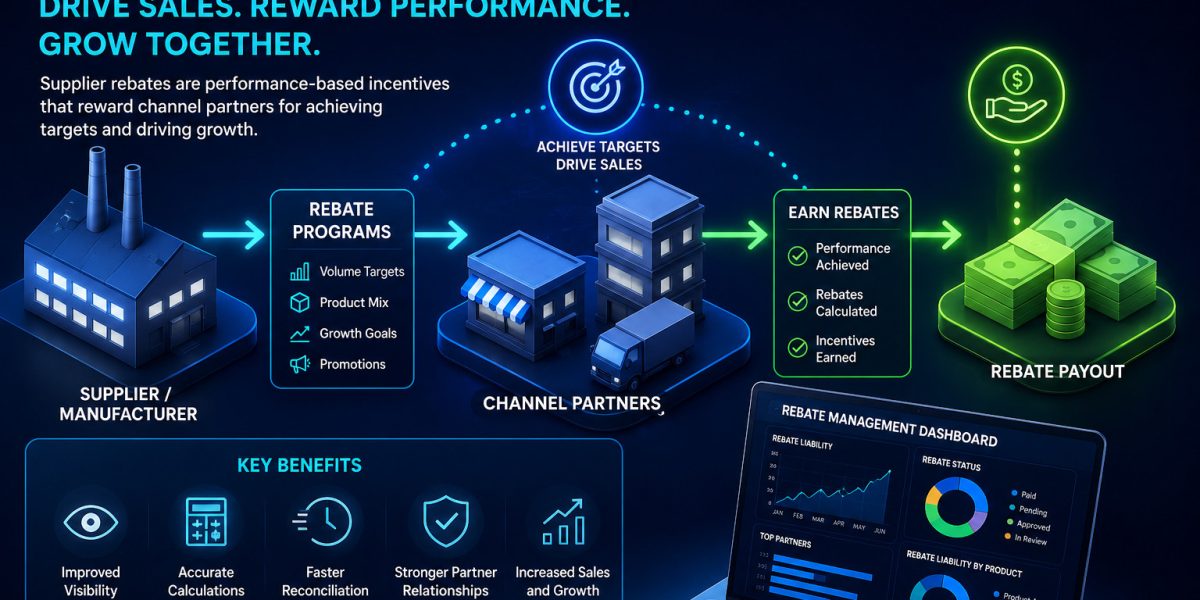
Understanding supplier rebates meaning is important for manufacturers, distributors, and channel partners that participate in incentive and pricing programs. Supplier rebates play a major role in driving purchasing behavior, increasing sales volume, and strengthening channel relationships. However, while rebates can create strong financial incentives, managing them manually often creates reporting challenges and financial risk. Therefore, manufacturers increasingly rely on automated systems to track and manage rebate programs effectively.
Instead of handling rebate calculations through spreadsheets and disconnected systems, modern manufacturers use centralized platforms that improve visibility, automate workflows, and reduce errors. As a result, rebate programs become easier to manage and more profitable.
What Is the Meaning of Supplier Rebates?
Supplier rebates are financial incentives that manufacturers or suppliers provide to distributors, resellers, or retailers after specific sales goals or purchasing targets are achieved. Unlike upfront discounts, rebates are earned after performance conditions are met.
Typically, supplier rebates are based on:
• Sales volume thresholds
• Product-specific purchasing targets
• Growth objectives
• Promotional participation
• Annual purchasing agreements
Consequently, rebates motivate partners to increase purchasing activity while allowing manufacturers to maintain standard pricing structures.
Why Supplier Rebates Matter
Distributors often work with multiple suppliers and competing product lines. Therefore, rebates help manufacturers encourage distributors to prioritize certain products or brands.
Effective rebate programs help manufacturers:
• Increase sales volume
• Improve distributor loyalty
• Drive product visibility
• Protect base pricing
• Improve forecasting accuracy
As a result, rebates become an important strategic tool for influencing channel behavior.
Common Challenges with Supplier Rebates
Although rebate programs offer significant benefits, managing them manually creates complexity. As rebate structures become more detailed, tracking performance and payments becomes increasingly difficult.
Manufacturers commonly face:
• Inaccurate rebate calculations
• Duplicate or disputed claims
• Delayed reconciliation cycles
• Limited visibility into earned rebates
• Difficulty forecasting liabilities
Over time, these issues reduce efficiency and increase financial risk. Therefore, manufacturers implement automated rebate management systems that improve accuracy and transparency.
Manufacturers using computermarketresearch.com streamline rebate calculations, automate workflows, and gain real-time insight into rebate performance.
How Technology Improves Supplier Rebate Management
Automation transforms rebate management from reactive reconciliation into proactive financial control. Instead of calculating rebates manually at the end of a quarter or year, manufacturers track performance continuously.
As a result, teams can:
• Monitor distributor performance in real time
• Calculate rebates automatically
• Prevent duplicate claims and overpayments
• Forecast rebate liabilities accurately
• Improve reporting and financial visibility
Most importantly, automation ensures that rebate payouts align directly with verified sales data.
Key Benefits of Automated Supplier Rebates
Greater Financial Accuracy
Automated systems reduce errors and improve reporting consistency.
Faster Reconciliation
Manufacturers process rebates more efficiently and reduce delays.
Improved Visibility
Real-time dashboards show earned, pending, and paid rebates.
Stronger Distributor Relationships
Transparent reporting reduces disputes and improves trust.
Scalable Incentive Programs
Manufacturers expand rebate programs without increasing operational complexity.
Because of these advantages, manufacturers rely on computermarketresearch.com to modernize rebate management and improve channel performance.
Why Manufacturers Are Moving Away from Manual Rebate Tracking
Historically, rebate programs were managed through spreadsheets and manual reporting processes. However, as distributor networks and incentive structures expanded, these methods became inefficient and prone to error.
Consequently, manufacturers now implement centralized rebate management platforms that automate calculations and provide real-time visibility into channel activity.
Final Thoughts: Supplier Rebates Drive Channel Performance
Understanding supplier rebates meaning helps manufacturers build stronger incentive programs and improve distributor engagement. When rebates are managed through centralized systems, manufacturers gain better visibility, improved financial control, and more scalable operations.
Manufacturers that modernize rebate management gain:
• Greater financial accuracy
• Faster rebate processing
• Improved forecasting
• Stronger partner relationships
• Scalable channel growth
👉 Book a demo of Computer Market Research’s rebate management platform:
Channel Management Tools Demo Request
When rebate programs are automated and transparent, they become a powerful driver of channel growth.